
Author’s Note
Written in October 2025.
AI is evolving faster than any technology we’ve seen. By the time you read this, some of what I describe may already be outdated — and that’s part of the story. This series isn’t about the tools. It’s about awareness, adaptation, and what it means to stay human in a world that keeps changing.*
Article 4 of the “Adapting in the Age of AI” series.
Every revolution leaves people behind.
Some because they couldn’t keep up.
Some because they didn’t want to.
The more I work with AI, the more I see this happening — not just in business, but in life.
Some of my peers are curious and experimenting every week. Others shake their heads and say, “I’ll stick with what I know.”
Neither group is wrong. But only one is moving forward.
When Change Feels Personal
Adapting sounds simple when you’re reading about it. But when the tools you’ve mastered for years suddenly become irrelevant, it hurts.
You can’t just “move on” from a skill you’ve built your identity around.
I’ve seen chefs who don’t want recipe generators anywhere near their kitchen.
Writers who swear they’ll never use AI because it “kills creativity.”
Golf instructors who roll their eyes when I mention custom GPTs for training journals.
I get it.
Change always feels like judgment — even when it isn’t.
The Modern Rust Belt
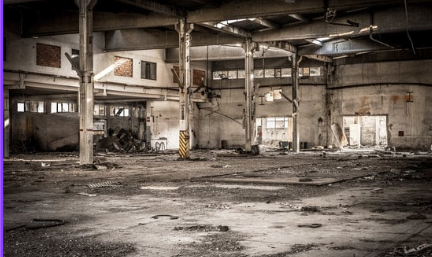
When I think about this AI wave, I can’t help but picture the Midwest — once the beating heart of America’s automotive industry.
Factories that built the cars that built the nation now sit empty.
Whole towns reshaped by one truth: technology moved on faster than people could adapt.
Now, AI might do the same thing — not to steel and rubber, but to spreadsheets and code.
This new “Rust Belt” won’t be made of metal; it’ll be made of displaced knowledge workers who don’t know where to fit anymore.
And this time, the change won’t be measured in miles of assembly line — it’ll be in invisible algorithms and productivity curves.
That’s why this conversation matters.
It’s not just about surviving the AI wave. It’s about making sure we don’t leave behind a generation of good, hardworking people who never got the chance to catch up.
How We Can Support Them
We can’t stop the wave, but maybe we can learn to notice who’s drifting behind it.
The question isn’t what policy can fix this — it’s how do we stay human while the world speeds up?
How do we retrain not just for new tools, but for new identities?
How do we help people rebuild confidence when their old skills stop being valued?
How do we teach curiosity to those who feel like technology left them out of the conversation?
Maybe support begins smaller than we think — in kitchen-table conversations, in community spaces where people can safely say, “I don’t understand this yet.”
Maybe it starts with us choosing to listen, before trying to teach.
Because sometimes awareness is the first bridge we can build.
Helping Without Preaching
The people who resist new tools aren’t lazy; they’re overwhelmed.
They’ve seen promises of “innovation” before — and sometimes, those promises hollowed out entire towns.
That’s why we need empathy, not lectures.
Show people what’s possible. Help them take the first small step.
One meaningful success story can ripple through a whole community.
The Human Part of Progress
I sometimes remind my kids: adapting to new tools doesn’t make you smarter — it just keeps you awake.
The goal isn’t to replace people.
It’s to keep learning together, so no one gets left standing alone when the world moves again.
Progress only matters if everyone can see themselves in it.
好運 (good luck) is a skill you can learn.
So is empathy.
In this revolution, we’ll need both.