
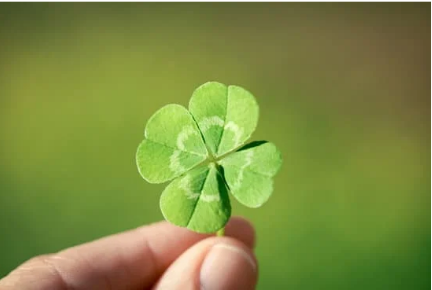
Golf has taught me a lot about luck.
For years, when I hit a slice off the tee, my first reaction was always the same: anger. I’d chew myself out, replay the mistake in my head, and start tinkering with my swing before I even reached the ball. By the time I stood over my next shot, I was carrying frustration, doubt, and about three different swing thoughts. You can guess how that usually went. The hole snowballed. One error stacked on another. I’d finish walking off the green already defeated, convinced I had “bad luck.”
Now, I think differently.
Take the same slice. The ball drifts right, nearly out of bounds, but it stays in play. Instead of scolding myself, I walk up, look around, and say: I’m lucky I’ve still got a shot. Even if it’s not perfect, I tell myself I’ve got a chance, maybe half a swing to reach the green, or at least somewhere close.
That shift changes everything. My short game is solid, so if I can just get the ball near the green, I like my odds. Sometimes I even feel like I can chip one in for a birdie. More often than not, I’ll settle for an easy up-and-down par. Either way, the momentum is in my favor.
Here’s the key: positivity compounds.
One good break leads to another because my mind is tuned to see opportunities instead of problems. I walk to the next tee with confidence, not baggage. The “lucky bounce” wasn’t just luck at all. It was my choice to frame it that way.
And I’ve noticed the opposite is also true: when I choose negativity, “bad luck” piles up. But when I choose positivity, I start creating my own 好運 (luck).
Golf taught me this, but it goes far beyond the course.
In life, the same pattern shows up. A small win can change the whole tone of a day. Maybe you wake up late, but instead of rushing and beating yourself up, you notice the extra rest gave you more energy. That mindset shift opens the door for more good moments to follow. You handle traffic better. You walk into work calmer. People around you respond differently. Before long, what could have been a “bad day” is filled with small stacks of好運 (luck).
Business works the same way. Every operation has problems. Staff call-offs, broken equipment, slow sales days. If I let each one drag me down, they multiply into bigger failures. But if I treat each as a chance to reset or improve, I start to see opportunities. A quiet day in the restaurant becomes a chance to train staff. A broken piece of equipment sparks a conversation with a vendor who later gives us a better deal. The mindset that sees好運 (luck) keeps stacking 好運 (luck).
The truth is, luck isn’t random. It’s shaped by how we frame the moment right in front of us. One person sees disaster. Another sees an opening. The situation is the same, but the outcome is completely different.
So the next time you feel unlucky, pause. Ask yourself: What if this is actually a good break? What if I’m lucky to be here, with another shot?
You might be surprised at how quickly 好運 (luck) starts to stack up.