
Summary:
A long drive, a tired body, and one breakthrough moment on a muni range. I share a golf swing change that gave my son Jou a boost in distance—and gave me something even better: gratitude. For the game, for the process, and for the quiet wins that make teaching golf so rewarding.
The Drive Was Long, but the Lesson Was Worth It
Last weekend, my son Jou and I were invited to play in his old high school golf team’s fundraiser. The shotgun start was at 2 p.m., so we drove up that morning, four hours in the car, hoping for a good round and a good time.
We didn’t play well. Not that it mattered.
What mattered was seeing Xander, Jou’s close friend, struggling with his swing. That struggle, along with the late finish, led us to stay the night. I made arrangements and asked if Xander wanted a quick junior golf lesson before church on Sunday.
He said yes. So did Jou. And that yes turned into something neither of us expected.
Sunday Morning on a Muni Range
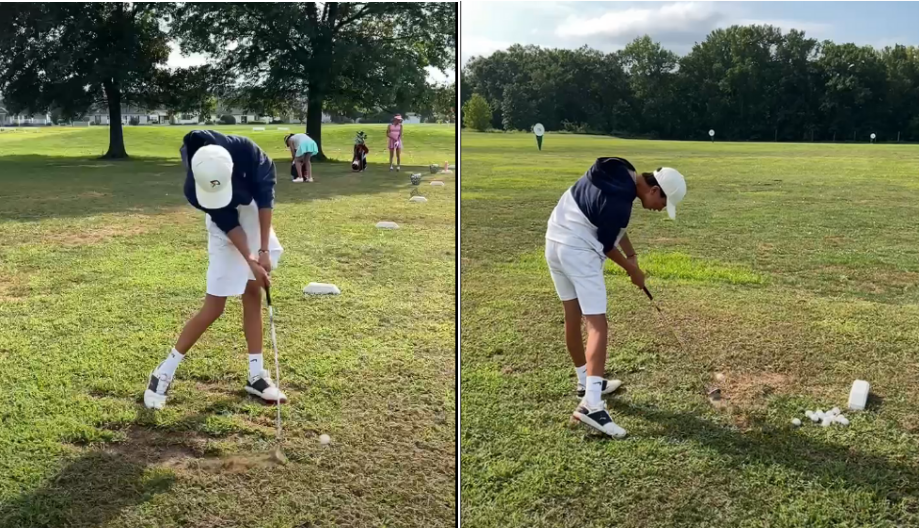
Our bodies were beat, but we still made it out to a small municipal course the next morning. Just a simple range session. No big plan. Just practice.
Jou was fighting a movement he couldn’t quite feel. It had to do with his trail side. His right hip and thigh weren’t moving the way they needed to. He knew something was off but couldn’t fix it.
So I shifted the focus.
“If thinking about your right hip is too hard, what if we approach it from the left—your left hip, your left thigh?”
That changed everything.
Diagnosing the Problem: The Early Shift
Here’s what was happening: at the top of his backswing, Jou’s right hip would overextend. That pushed his weight left too early in the downswing, causing his left knee to get trapped behind his left hip.
From there, he had to force the left knee forward just to get into a proper downswing sequence. It was inefficient. It cost him timing and distance.
This is a common issue in Junior Golf; their bodies are just too flexible, and it is hard for them to control their body.
The Breakthrough: A Swing Change That Made Sense
Once we turned the focus to his left side, engaging the left hip and thigh as the driver, Jou found the move. Suddenly, everything synced up. He wasn’t thinking. He was feeling.
The result? Ten more yards with every club. Better contact. More balance.
This golf swing change wasn’t about rebuilding anything. It was about awareness and sequence. One small adjustment. One clean connection.
The Quiet Win That Meant Everything
I told him this swing might be the best gift I could give him—not just as a dad, but as a coach.
It’s efficient. It’s powerful. And most importantly, it fits his body. Jou isn’t the biggest player out there, but he has great touch and feel. Now he’s got a swing that matches that.
But the real gift?
His love for the game. His willingness to show up, even tired, and learn. The quiet way he lights up when something clicks.
That’s the kind of father-son golf moment that reminds me why I do this. Why I keep teaching. Why I keep watching.
Looking Ahead: More Lessons from the Range
This post is part of a short series on golf instruction for juniors. Coming up:
- Xander’s Golf Lesson: Building Confidence Through Struggle
- Habbits – Managing Habbits In Golf Swing
- Solid Putting: The Touch of a Young Artist
Teaching golf isn’t about swing perfection. It’s about helping players, especially young ones, learn how to feel their own movement. To trust it. And to enjoy the process.
And for me, it’s about gratitude.
Key Takeaways for Golf Parents and Coaches:
- If a movement doesn’t click on one side, try teaching it from the other side.
- Efficient golf swings come from sequence, not strength.
- The best junior golf lessons often happen when no one’s keeping score.