
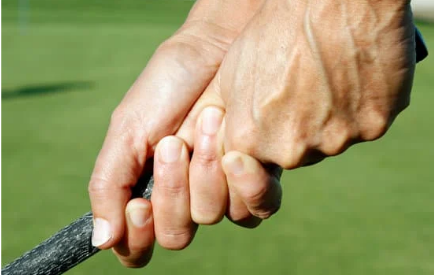
How I Teach Golf (Inspired by Kelvin Miyahira) is a 12-part series on MyJLStory.com. Each post shares one of my personal takeaways from studying Kelvin’s biomechanical framework and forging it through years of teaching and experimentation. These are not a direct representation of Kelvin’s teaching — they are my interpretations, shaped by my own experiences and mistakes. Start here, then follow the series for a full picture.
I didn’t start this series to add another swing theory to the pile. Kelvin’s work isn’t a theory in the traditional sense — it’s a biomechanical model grounded in anatomy and real human motion. I began this project because I was stuck.
I had studied at the Golf Digest School under Jim Flick and Bob Toski. I tried Ballard’s connection drills, Leadbetter’s early wrist hinge, Mike Bender’s LAW theory, and Dr. Suttie’s biomechanics. Every system had value, but every system also came with exceptions, contradictions, or band-aid fixes. I could hit the ball well, but I couldn’t explain why the same faults kept coming back every few months.
Then life changed.
It was 2009. I got laid off from Longaberger, where I worked as an international buyer. My son was on the way. I loved golf, but my swing demanded two long practice sessions a week, plus three workouts in the gym just to stay limber. I didn’t want to sacrifice family time, but I also didn’t want to lose the joy of playing golf at a high level. Something had to give.
That’s when I stumbled across a small blog on the Around Hawaii website. The author? A guy named Kelvin Miyahira.
He wasn’t just repeating positions or echoing tradition. He was asking hard questions about biomechanics — flexion, extension, abduction, adduction, the transverse plane. He openly challenged assumptions. He even admitted when things didn’t add up, like during his time at Leadbetter’s academy. That honesty hit me hard, because I had lived the same confusion.
I dove in. I read every word. I even took an anatomy class so I could understand what he was writing. It wasn’t easy. And it took me five years of grinding before I could truly apply his ideas to my game and my teaching. But once I did, my swing stopped being a mystery. I could finally move with purpose, diagnose faults without guessing, and teach others with anatomical clarity.
Now I can play golf at a high level with very little practice. Not because I swing harder, but because I understand my body and the movements that actually matter.
This series is my way of carrying that forward. These articles are not a direct representation of Kelvin’s teaching — they are my takeaways, shaped by my own experience. But I believe this mix of Kelvin’s framework and my teaching journey can help golfers find clarity where so many of us struggle.
And most of all, I’m grateful. Thank you, Kelvin, for sharing so openly.
[Photo Placeholders]
- Old notebooks / books from early teachings
- Screenshot of Around Hawaii blog
- 2009 practice vs. now (swing comparison or life photo)
Closing Theme
Golf improvement doesn’t start with drills or tips. It starts with awareness — and with the courage to admit when what you’ve been told doesn’t make sense.
Call to Action
This is the first post in my How I Teach Golf (Inspired by Kelvin Miyahira) series. Follow along as I share the principles, stories, and lessons that reshaped my game and my teaching. Drop a comment if you’ve ever felt the same frustration chasing positions — I’d love to hear your story.
Disclaimer
Kelvin Miyahira is the original source of the biomechanical concepts referenced in this series. These articles represent my personal interpretation and experience applying those ideas as a student and teacher. For Kelvin’s original work, visit his published writings and videos. This series is a tribute to his depth and clarity, not a replacement for his direct teaching.