
Most people don’t change when they’re told something is wrong.
They change when they see it.
That sounds obvious, but it explains a lot of frustration in golf, parenting, leadership, and relationships.
Golf makes this painfully clear
A few weeks ago, I told my son Jou something simple during practice.
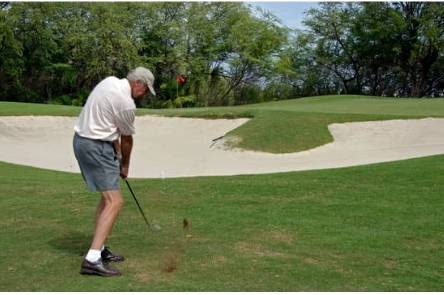
In his chipping setup, he was starting to aim slightly right of the target. I suggested laying clubs down during practice just to check alignment.
At the time, his chipping was fine. The results were good. He didn’t feel a reason to change anything.
So he didn’t.
Two weeks later, his chipping started to fall apart. He was steep. He chunked a few. Distance control disappeared.
That’s when he came to me and said, “Can you look at my chipping?”
I pointed out the same setup issue. He fixed it. The chipping came right back.
Nothing magical happened in those two weeks.
The information didn’t change.
The timing did.
When the fault didn’t feel like a fault, there was no motivation to adjust.
Why this matters beyond golf
This pattern shows up everywhere.
You can’t teach awareness into someone who doesn’t think there’s a problem. Pressure doesn’t help. Repetition doesn’t help. Volume doesn’t help.
In fact, those things usually delay the moment of realization.
When someone hasn’t seen the fault yet, all advice feels theoretical. It feels optional. It feels like noise.
Once they see it, the same advice suddenly feels obvious.
That’s not stubbornness.
That’s human nature.
Adjustments are not always available mid-round
One of the biggest mistakes golfers make is trying to change their swing in the middle of a round.
Most people aren’t capable of meaningful mechanical change under pressure. And even if they are, the cost usually outweighs the benefit.
That’s why the most reliable adjustments mid-round are:
- setup
- target selection
- strategy
- expectations
Not mechanics.
The same is true in life and leadership. When things start going wrong, most people try to change the biggest thing they can think of.
That’s usually the wrong move.
Sometimes the best move is no move
There are moments when you’re not clear enough to recalibrate accurately.
You don’t fully understand the fault yet.
You don’t know which adjustment will help or hurt.
In those moments, I’d rather you do something boring and disciplined:
stick to your game plan and ride it out.
That’s not giving up.
That’s buying time.
Stability gives awareness room to arrive. Chaos pushes it further away.
Between shots, again
Between shots is where this decision lives.
Do you:
- force a fix you don’t understand yet, or
- hold steady until you see clearly?
The goal isn’t to change faster.
The goal is to change correctly.
Awareness comes first.
Adjustment comes second.
And until the fault becomes visible, patience is often the most skillful move you have.